Friday, January 4, 2008

some thoughts on political action: private and public

During a significant portion of the last few years of my life, I believed very passionately in pursuing a life where I dedicated my efforts to making significant change in the world. However, I have also felt somehow displaced when around people that worked in the “lefty” fields of organizing and social change. However, I still held onto to my beliefs. Of late, I feel I have shifted, perhaps a better word is focused my views toward this kind of work.

Previously I probably would have described the pinnacle of my “organizing” life was being field organizer for Turn Your Back on Bush. It was a large action, national in scope. I helped hundreds of people make their way to Washington DC to participate in this demonstration. I talked to press. It was all very glamorous and big. At the end, I walked around the monuments of DC and cried as I felt like I had reached a little closer to their meaning. I had enjoyed the freedoms those founders spoke of. I felt like I wanted to launch myself into that kind of work. What I at the time had viewed as making a big difference may well have been an enchantment with the five minutes of fame from media attention. I don’t think I did make a big difference that day. I do think I exercised my freedom of self-expression and gave others a vehicle to express their own thoughts in a public forum. This is important and valuable, but not enough to change Bush’s policy. At the time I felt my action was necessary. I felt I had to do it because the current circumstances required an immediate and loud response. I viewed this sort of public action as a way to make a visible, media captured event which would lend volume to my beliefs. The problem with seeking volume is often the means to find it. Organizations and political factions go to great lengths to gain volume and thus gain access to other people’s ears and grant them to opportunity to win that person’s support. In political organizing this is messaging. The right made an art of it during the Bush era and in response left organizing groups adapted these methods. So therefore the viewed necessity of a particular action allows for the excuse to follow even the tools of the master’s house.

Several events and circumstances have led me away from this line of work and way of thinking. For one, as an organizer for TYBOB and in other similar positions I have worked up to 85 hours a week. The work is endless. There is always something else to be done. However, isn’t this worth it since it’s for the “cause.” I suppose to some people this sort of unending work is worth it. However, I am married. I need to spend time with my husband. I want to nurture a home for our family. In order to do that I want to be there to prepare dinner, share meals with him, and enjoy my time with him. I want to be able to spend time with friends, inviting them over for a party or long lunch. I want to do these things because all humans deserve these things. But there is more to these kinds of actions. All things, even making dinner for two, can be a political act. The very reason I wanted to be someone that worked for social change was because I wanted to act against systems of injustice, consumerism, corruption, and inhumanity. Is it not inhumane to be unable to eat dinner with your family? The values I believe in are not high and lofty values that are accessible only in books of law. These are basic concepts of how we should live our daily lives. If I work 80 hours a week against the war and then return home to eat a microwave dinner on the couch while watching TV with my husband, am I not in a small way replicating and even contributing to the very evils I fight against? To eat food rife with petrochemicals and shipped with petroleum while not communicating with my husband but preferring to just passively consume something a large corporation thought might be a hit this season with 20 something females. I might as well place my own signature on a declaration of war, become a corrupt business man, and divorce my husband.

The conclusion that I have for now come to is that actions without speakers are indeed just as valuable. To participate in smaller, simpler actions which directly and consistently embody one’s values is indeed a worthwhile goal. Instead of placing my attention on a job working for social justice, I am aiming for a simpler job, but one that I find truly ethical and sound. I seek this simpler job so that I might have time. Time is something I value so highly because time provides me the opportunity to pursue my values through the lifestyle I choose. By having time to seek out local businesses, walk, cook my meals from scratch, make Christmas ornaments, bake bread, and spend time with my husband, I am able to live out my beliefs in a very simple and basic way. I find it more pleasant, because I am able to feel that I am more consistent and balanced between my beliefs and my actions.

Some might feel this sort of small life is too small and there is no hope for making a difference. I suppose this could be true. However, I find in my life when people approached me with pamphlets or told me to support a cause I usually walked the other way. Though I myself was an organizer, I never found the organizing worked on me and I more often than not found it annoying and intrusive. My path was different. I found myself inspired most by people who lived in total accordance with what they believed. The most inspiring people to me were the nuns who ran and taught at my high school. Though I disagreed with them on many issues, I still found their lifestyle and approach to their beliefs deeply influential on my own way of thinking.

The previous point brings me back to why I moved away from ideas of organizing. I have spent some years working in some form in the field of education. Again and again I have been trained and I have witnessed that people are most likely to learn from a demonstration or modeling than from someone just speaking and telling them what to think. A reenactment of history, doing a scientific experiment, providing an example English paper are all better ways of teaching than just telling the information. The same I feel is true in the realm of trying to enact change. Modeling behaviors is much more effective than just preaching them. Showing people how to live with minimal environmental impact, how to support local businesses, or whatever makes each of these things more accessible. I am not sure how accessible it is to a broad audience to do a public demonstration. I think it is important to be able to do a demonstration, but I think the public act is abused. It is rife with its own systems and expectations. It is something for the reporter, the demonstrator, and perhaps the police. It seems it rarely reaches out of that realm. So I am not sure the true value in public demonstrations is in effecting change. I think there is value at times in feeling the freedom to speak in public about a belief. But this is perhaps more on a personal level. The sad reality of our current ideas about public demonstrations is that they are not places of dialogue. People from different factions do not mingle together and talk through the issues. If that were the case than I would say these actions are indeed effective and necessary. I am not sure what I think about the role of public action. As it is commonly approached I do not find it very useful. I am not sure what kind of actions I would find more useful. For the time being, I find living a simple life in total accordance with your beliefs is about the most honest, ethical, and complete way of carrying out a public demonstration.

Friday, December 28, 2007

reading and a little about writing

Of late I have found some struggle in writing. There are probably several explanations for this occurrence - many rife with details I chose to avoid in writing like this. However, I feel a significant reason I have paused in my writing (though pause isn't quite accurate. I am writing, but it is without direction, focus, or satisfaction) is because of the missing link of reading.
I have begun these writings as a way to explore and delve into ideas of interest to me. But I find now that I have just begun to articulate these ideas that I begin to in some way hesitate to return to an idea in writing. I feel a certain falsity in representing an idea without any exploration of the history and development of the very idea I speak of. Interesting to think of an idea having a history – a sort of narrative that traces its growth over time. How can I begin to grasp these ideas without some investigation into their sources, interpretations, and the dynamic nature of their very existence?

So with some suggestions from my husband I have decided to begin a reading list of some philosophical texts. For those of you that happen upon this blog, please feel free to recommend. I’m unsure as to how much my reading will actually inform my writing. But, on a very personal level, I hope it makes me more true to myself. That the ideas I represent to possess in my writing are indeed ideas that I understand, support, and aim to actualize in my daily living. I am no fool that thinks what I write about here has not been written before and indeed much better than I can hope to achieve. I did not begin these writings as an expression of talent, for it is not hard to see I don’t possess much talent in writing about ideas. I began these writings to find a deeper connection to the very common place behaviors of my week that I most cherish and feel in some way connects me to my humanness. I wanted to explore some of the foundational ideas behind these daily tasks. Indeed, it might be too much to say I really had foundational ideas to begin with – perhaps simply a blueprint in mind for the foundational structure. I have come to a point, quite early in this little pet project of mine, where I realize I must seek out ink other than my own.

So, where will I begin, you might ask. My husband received a copy of Plato’s Phaedo for Christmas. He recommended Plato as a good starting point and has granted me the envied permission to be the first to crack to the book binding. We’ll see what will come of it…

I feel compelled to note the extent to which I speak of my intentions behind this blog writing in the previous paragraphs. I make it sound as though I have all along had a very clear direction and purpose to my current vein of writing. I must clarify that this supposed direction is one that as I crawl through the labyrinth of writing I surprise with my sudden appearance and grasp tightly onto as a talisman to provide me with luck on my journeys. One thing that I have come to remember through my writing rebirth is how writing is always clarifying the mind, cleaning out the rubbish. I find the writing process is much like an archaeologist sifting through the piles of debris, discovering along the way small treasures of interest for later study. But for the moment, we are in the field, we are excavating through the dirt fighting against the defeat of memory and the powers of decomposition. Each item of discovery must be treated with the import of history, but later will be scrutinized by other value systems. For now it is best to ignore the coming scrutiny.

Monday, December 17, 2007

Holiday Baking


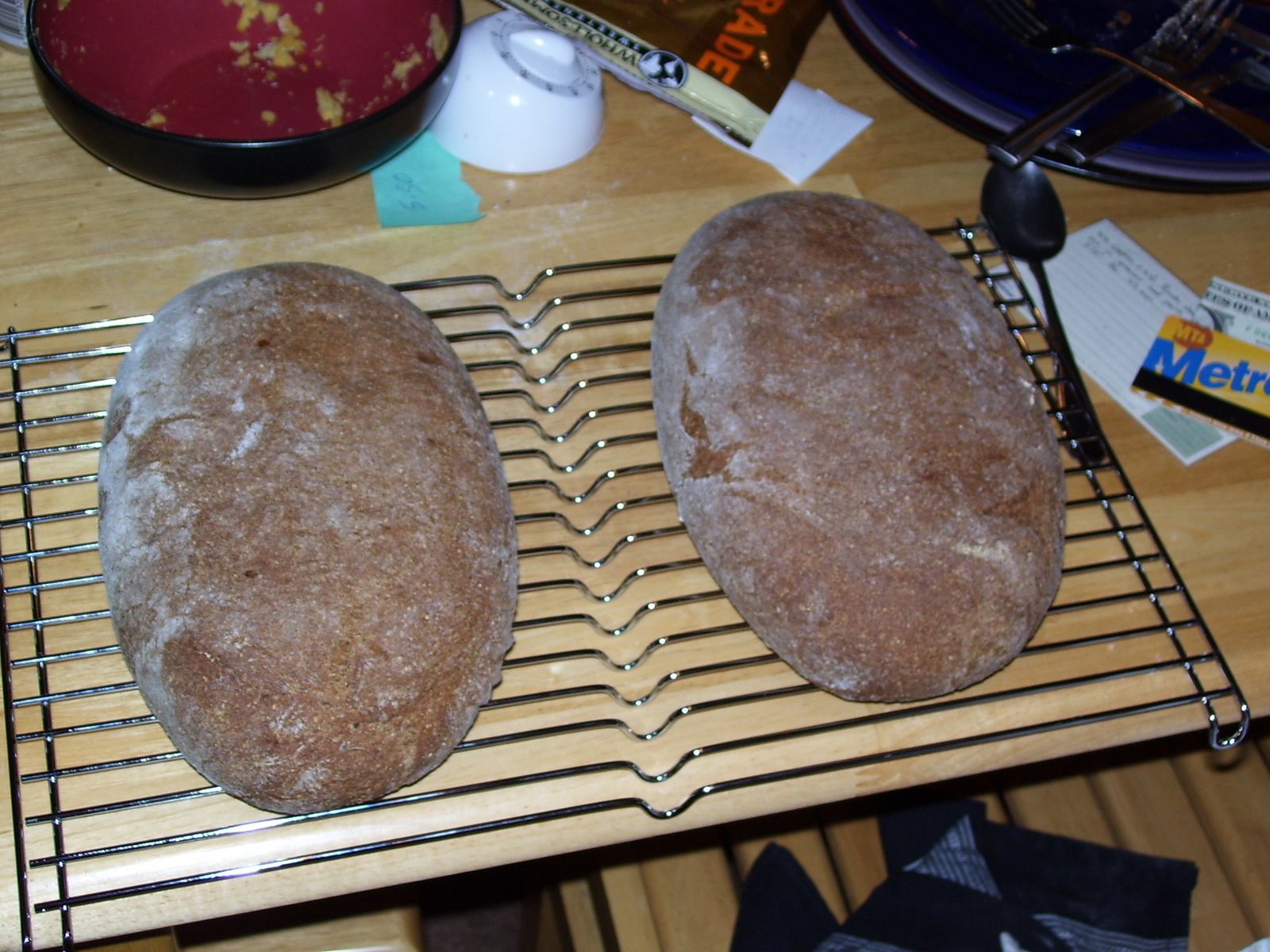
Here is a picture of the Swedish Limpa Rye Bread I baked today which will be gifts for some family and friends this holiday season. It's a great rye bread with orange, coffee, and anise. mmmmm...

I promise to post recipes at some point on here!

Sunday, December 16, 2007

our daily bread

People often refer to our daily basic needs as “our daily bread.” What I love about this phrase is that when you understand the process of making bread you can begin to grasp how complex of an idea it is. There is a connotation that one’s daily bread is what one requires to survive. But, as a bread baker I can’t help but think this phrase must be deeper than that. Certainly bread baking includes many elements in its making that are indeed needed to survival. A basic bread recipe includes flour, water, salt, and yeast. However, in a larger picture bread making requires sun, earth, and rain to grow the grains needed to make the flour, the earthy mineral of salt, and the process of fermentation represented in the yeast. The process of making bread requires skill, a skill that must be taught. I imagine historically this skill was taught from one mother to her daughter or from one head baker to his or her apprentice. Bread making necessitates the time required to prepare the dough and begs the active use of your hands. As the dough is prepared and baked it grabs onto your senses: the feel of the moist dough, the aromatic smell of the yeast, the warmth from a loaf just pulled out of the oven, the pleasant sight of a loaf of bread torn to be shared with the family. And of course, it requires many periods of rest. There are periods of rest after each significant step of the process of making dough. These rest periods range from 10 min – 24 hours. And what exactly are we waiting for, especially during that long 24 hour slow rise of the dough that I so love. We are waiting for the yeast and gluten to develop. We are waiting for the magical fermentation process of unfold. We are waiting for wonderful taste and texture. We are waiting for growth, for the rising.

So when we speak of “our daily bread” I feel we speak of much more than just our most basic needs. We speak of enriching our lives with the cycles of nature, time, sensual enjoyment, communal exchange, and blessed rest. It is possible to side step some of these aspects of bread baking, but the result is not nearly as delicious or satisfying. In order to be truly satiated one must go through each step of the preparation. If you are seeking your daily bread you must be completely dedicated to the process. We expect too little of our time at the table for indeed it is planted with miracles and wonders just below the surface of the wood.

Saturday, December 15, 2007

When I Grow Up...What to pursue: your vocation or your passion?

When all of us were children I am sure we used the phrase, “when I grow up I want to be a _____.” As a matter of fact this phrase permeated my language until I was in college. After college, I felt I had come to an age where I should no longer be using that phrase, being what I suppose most people would call a “grown up” (ugh, how strange!). But that sort of thinking still was very much alive in how I thought about future time. I will be a ____, no actually Iwill be a ______, or on second though I’d rather be a _____.

Throughout the past 2 ½ years that I have been out of school I have been tossing my ideas back and forth about what I think I will be doing. I have often been fixated on the future, what will I become? What will I do with my life? What I find interesting about this process is that there are so many different ways to conceive of future time. I suppose there is the rather cliché idea of finding one’s passion and pursuing it. We are supposed to figure out what that one thing is we want to do with our lives and just do it. And there is another idea, that of determining one’s vocation. We are apparently called to do something and it is up to us as to how we answer that call. What I find striking is how different these two ideas are. They include very different approaches, and are rife with unique difficulties!

I looked up the word “vocation” in Webster’s New World Dictionary and it said that the word is derived from several Latin words: “vocatio” meaning a calling, invitation, court summons; “vocare” which means to call, and “vox” meaning voice. This idea of some mysterious being or trade actually addressing me, inviting me to partake in a particular action and behavior is indeed quite bizarre, perhaps even frightening. Will I like what I am called to do? Who will call? How will I know I am being called? What do I need to do to hear the call? Must I believe in a god? Do I need to pray? When will it happen? And, what I am most fascinated by is why would I be asked to do something in particular? Is there really some predetermined purpose that I am meant to fulfill? What if I said no? What I find striking about this idea is that it is a rather outward action: listening for something or someone. The act of listening means that you cannot let your self get in the way. And of course, it seems that this process necessitates waiting. I must wait for the call. Perhaps, even vigilant. How long must one wait? What do you do while you wait?

As someone who went to Catholic school from 4th through 12th grade, I can’t help but feel the religious overtones of the word “vocation.” As a student, I was taught that one’s vocation was part of God’s will. In order to determine that will, I must pray and await an answer. I thought then and still think it somewhat silly to expect any sort of response from God. How could I expect to understand the divine’s call? Can you even imagine God’s mouth open and beckoning? Would I be able to live through the experience and still be a human? I find myself more charmed with the idea of signs. There are these simple mundane things laced into the commonality of a day, but they somehow reverberate with elements of the divine. Perhaps they lead onto the path of the will of the divine. This idea requires such faith, dedication, and perhaps a certain amount of emptiness of self - the ability to give of oneself on account of small hints or nudges that perhaps are of a divine nature. And, I still must ask, why? Why would I be called to a particular action? Is it something I would be good at? There must be more than that. I am sure dozens of people can do the jobs that we are called to. Is there some importance to being part of the group called to a trade? Is there some contribution I can make that no one else can? Deep down, I feel this is unlikely.

There is the other idea of “pursuing one’s passion,” a somewhat new-agey and idealistic strategy, but I have to say it sounds pretty good. It seems that this concept requires one to look inward and discover what you love to do. Once you have your finger on that rope, you are supposed to hold on and pull yourself along that rope and let it guide you. But what if you have several passions, can you pull yourself along three different ropes? And what is it that makes us love a particular action or idea. Why do some prefer numbers and others prefer letters? Is there any purpose to those preferences?

And then there are several other conundrums to this particular process. I can talk from experience here. As a college student I was very idealistic and very much wanted to see change in our society for the better. Not only did I want to witness it, but I wanted to act to make change happen. After college I pursued a few different paths – 2 AmeriCorps positions and a position as a political organizer. In these positions, and especially in the position as a political organizer the mission of the organization I worked for was something I fully supported and felt passionately about. My work became wrapped up in daily tasks I despised which I found completely uninspiring and at times I felt the work I was doing was itself preventing progress. I was enmeshed in a bureaucracy that had a prescribed way of pursuing it’s work, and there was no deviating from that prescribed process. My job was to simply do what the instruction manual told me to do. There was no room for my ideas, or the ideas of those I was supposed to be organizing. We were just following a calendar and waiting to hear what we should do next from the powers that be. I also found hypocrisy to the work of this and many other organizations that pursue an honorable idea. In the very nature of a large and powerful organization, there is a certain amount of powerlessness among those that work for that organization. The larger it is, the more powerful the will of the “big guy” is. There is a significant loss of voice and empowerment in these employment situations. You are asked to do the work as directed, not make it. For me, this seemed directly contrary to the very ideas a political and social change organization is founded on. How can people learn to become politically viable and vocal if they are simply asked to follow directions from yet another large organization with a spiffy logo? Happily, I held the job of political organizer for only a month. What I was doing was indeed in some way related to what I was passionate about. But I feel I need more than proximity. I actually want to do what I love. I want to love my work. Is this too unrealistic? And if it is, why is it unrealistic?

Anyway, I rant and digress. Back to the topic at hand. What I was originally trying to say is that there is a difference between work that is related to something you are passionate about and actually doing work that you love. But I wonder, is it selfish to only do work you love. Should I simply garden, write, and bake – would that be ok? Is it an ethical pursuit if it is only non-harming? Should it be more – bigger? Or is that simply ambition and greed? Is it enough to love something? Is it enough to love someone? Should there be a larger contribution?

At the current moment, I am rather intrigued with the simplicity of pursuing something you enjoy doing that is indeed a simple trade, doing it in a positive way, and pursuing it perhaps as a means of contemplation. Again, I find I am greatly influenced by my Catholic school background. I attended two Catholic schools – one with Visitation nuns and the other with Dominican nuns. In my middle school days I actually had the strong desire to become a nun, preferable a contemplative. I was devoutly Catholic, despite being unconfirmed and from a family of one atheist and one fallen Catholic. Though I have since deviated from the path of becoming a nun, and even from being a Catholic, I still am very much inspired by the idea of a religious calling to a contemplative order. Part of what I find inspiring is the pure simplicity – pursuing very simple, hands on labor but doing it as means to quite literally work through spiritual ideas. The work can become a metaphor for so many religious concepts. Also, the work can become a text that guides, inspires, and drives the journey. Father Domenic Garramone OSB writes about the religious lessons and metaphors he found through baking bread in Bake and Be Blessed (a great book, I definitely recommend it!). Perhaps part of the reason why each of us might have a vocation (referring to things I was talking about earlier) is because there is a particular task that might enhance one’s spiritual life more. Although this predicates that our vocation is to some extent predetermined and willed by another higher being.

Alas, I think I have come to the end of this entry, as inconclusive as it might be. Have a wonderful weekend enjoying time away from what may or may not be your vocation…

Friday, December 14, 2007

thoughts on the homemade: time, space, and intention

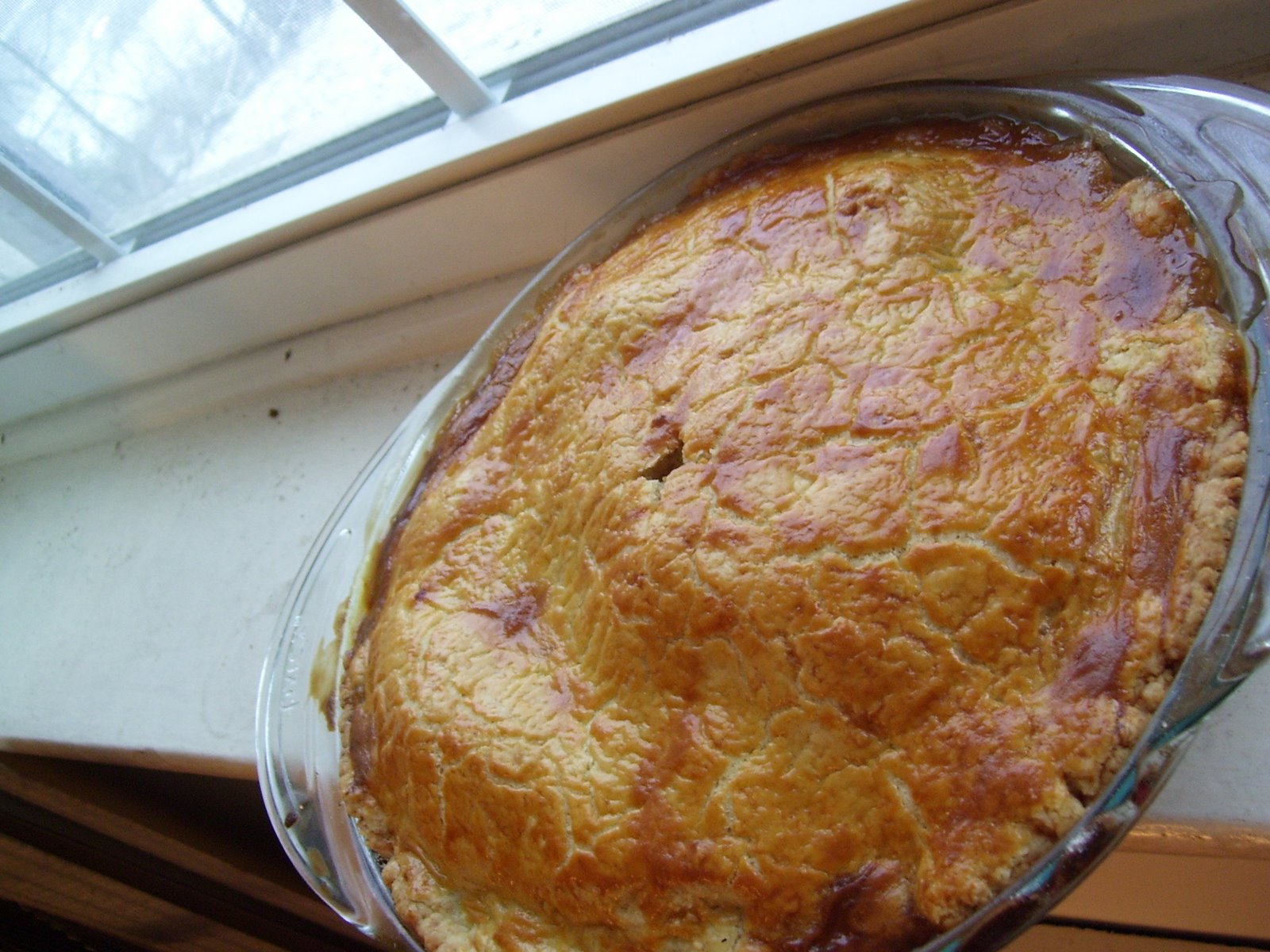
The following are some thoughts I had today as I gleefully baked an apple cranberry pie for my husband’s birthday. Despite the fact that I was baking pie, the text mostly refers to baking bread, but I suppose that is fitting considering the title of this blog.


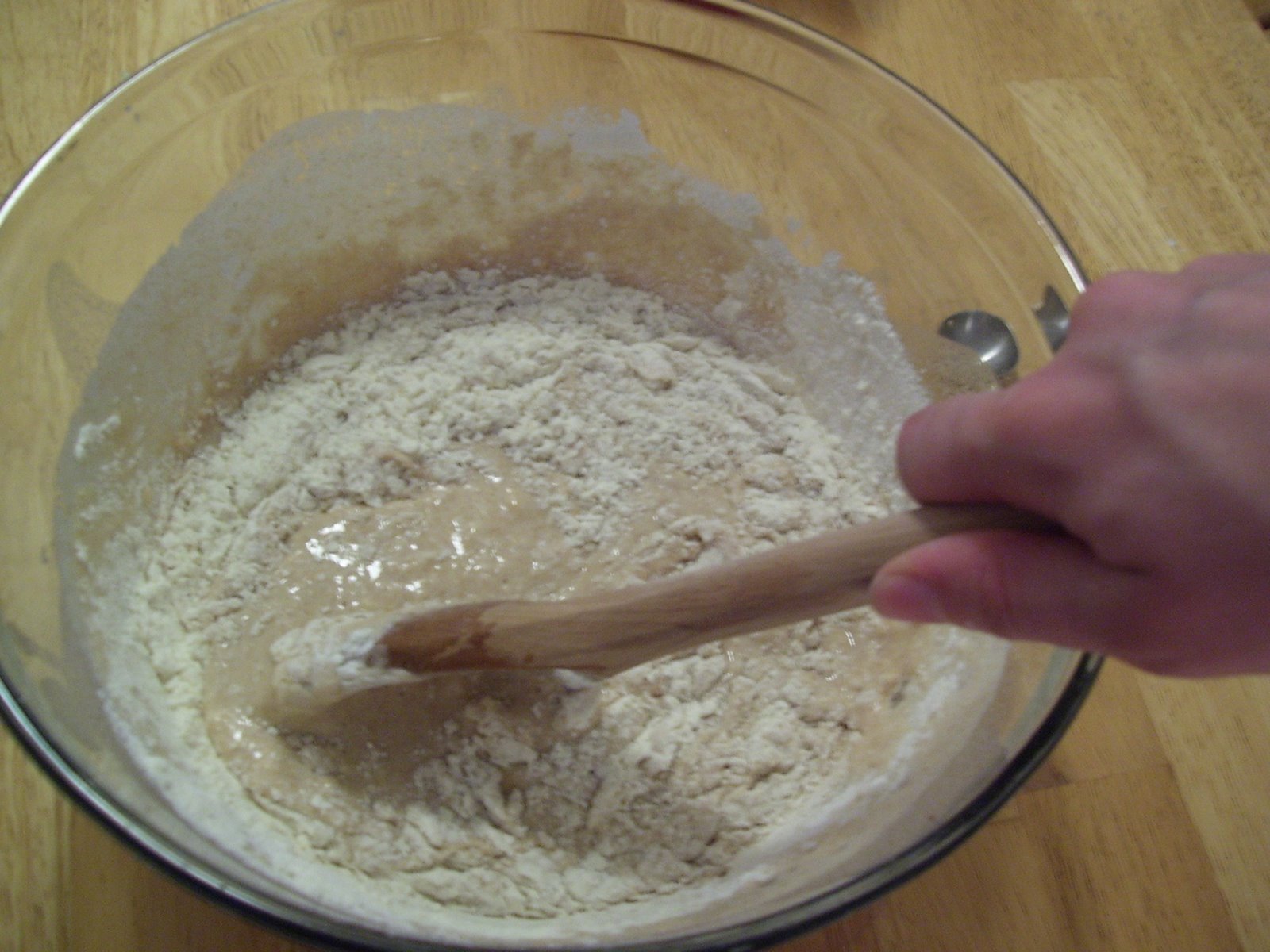
It is curious how the term “homemade” is so often tossed around. People often go home and make something and say that this is “homemade _____.” What they don’t say is that they used the bread machine, the food processor, and stuff from the frozen aisle at the supermarket. I think it is more than setting that can make something homemade. A home is not a place where machines are stored. Bread machines, mixers, food processors all are not necessary to a home. I think we commonly conceive of these things as tools. Making bread from scratch by hand seems insurmountable unless armed with the proper “tools.” What is odd about this thinking is that the tools are consuming tons of electricity in order to function. They are made mostly of plastic, all petroleum derivatives. They are complex, easy to break, hard to fix, take up tons of space, and consume tons of fossil fuels both in the way they are powered and in their very composition. Tools should simplify and allow one to have more control over what is happening. They should be efficient, and pleasant to use. These noisy, clunky, things come far from the true definition of a tool. What I view as the greatest loss from these kitchen machines is that they separate the person from the work he or she is doing. Rather than kneading the bread with your hands, you are turning on and off a switch. There is no process, only the start and beginning. Input and output.

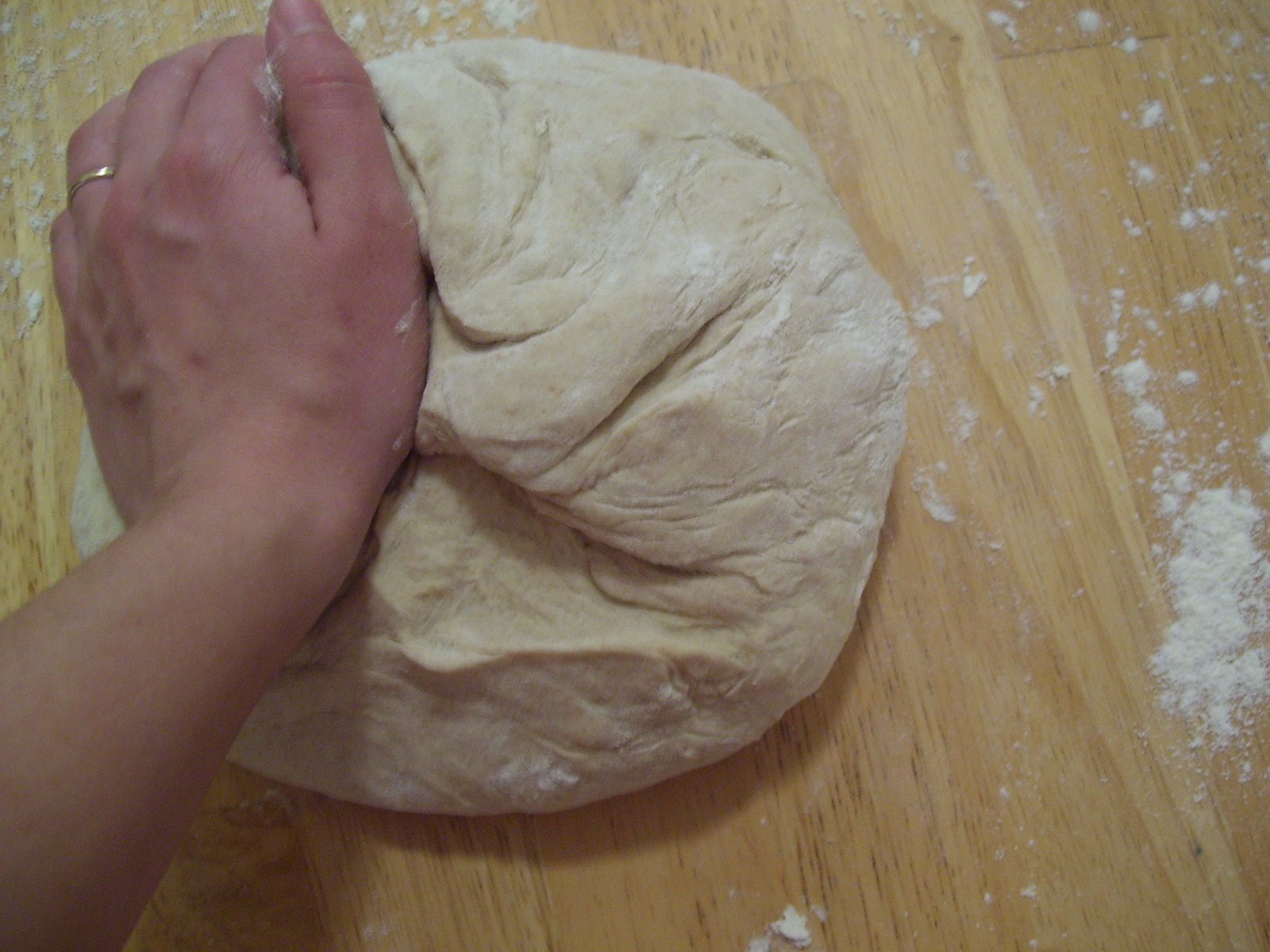
When I make something with my hands I enjoy feeling the process at my fingertips. As I add more flour and knead dough I can feel it develop and change over time. Time, I think, is one of the more precious and valuable ingredients. Being able to witness time progress and something change or develop in time is truly magical, miraculous even. I want to be as close to that miraculous event as possible. I want my hands in it. I want its dust all over my palms. What is a prayer if there is not a little flour in between those hands?

Is there something holy about a thing being handmade? I feel there is. When I make something I get into a meditative state. I am relaxed and at ease. I feel blessed to watch the simple magic of yeast, heat, and the fruits of soil and sunshine become something to nourish myself and my husband. Making something by hand forces me to reckon with my time and space. It requires time to prepare things by hand – chopping rather than using a food processor, kneading rather than using a mixer. However, my time is not simply spent laboring away at the current baking endeavor. I am also spending time in one place, and that place happens to be my home. I am present in the house, and also located in a very public room – the kitchen. So while I am dedicating time to food preparations, I am also circumstantially spending time with whoever might be home at the moment. I am doing something that does not fully distract, for bread making includes mixing and kneading for somewhat long periods of time and frequent rests, so I am easily available for conversation. If no one is there, there is still something meaningful about the way I am spending my time, for a loaf of bread is not prepared for me alone. I am making that bread for my family. Time is being dedicated to the wellness and nourishment of my family. Do I feel these conditions make the act of bread baking a holy act? I believe that if given full attention and intention, yes, it can indeed be a holy act. A sort of prayer.

I feel it hard to ignore that I mentioned “intention” in the previous sentence. This I feel is one of the most important things in creating food. Food is always prepared with an intention. Maybe it’s intended for your family for dinner, maybe just for one, maybe for guests. No matter what, there is always an intended end for all food. I feel this intentionality of food is often overlooked. How, I ask you, how could anyone feed their child Kraft mac n’ cheese? What about those dinners with sauces derived from packets of mysterious powder? And Bisquick – as if real pancakes are any more difficult than the mix? The intention of food has become convenience and speed. But what are the consequences of those intentions being poured metaphorically onto our dinner plates. Oh, but do we even use real plates, or is tonight a plastic tableware night so it can all just be disposed of as immediately as possible?

Ugh, you can tell this really gets my button. But it is something I feel passionately about. I would quit my job if I couldn’t find time to cook a few good meals during the week. As I cook or bake I love to think about who the food is for. If I intend a meal or a loaf of bread for someone I care about than I want to reflect that in the manner that I create that meal. I suppose there is the all too cliché idea of cooking something with love. But, what exactly does that mean? I care about the person so I want them to enjoy what I make. I want it to be delicious to that person. I want it to be nourishing, so I want to make enough, maybe a little extra. I want it to be healthy so that person’s body is aided by my cooking. Maybe I’ll use organic ingredients so I know that it is not full with toxins. I only use ingredients I know are natural and meant to be consumed. And maybe I want it to be a little special, so I make it look pretty. All of these are such simple little things, but they are certainly not happening when you dump a blob of Campbell’s soup into the pot. If I sit down to share a meal with someone I like to know that what I have prepared for them mirrors the feelings of care and love that I have for that person. There is a basic way of respecting the basic needs of a person – physically, mentally, and spiritually – by preparing food that is well made and delicious.

I could go on, but I feel a need to stop myself here. There will, I hope, be more posts to follow exploring these ideas.

In the meantime, if you by any chance have read this far, feel free to comment.

All the best and have a good night.


Monday, December 10, 2007

purpose

alrighty...so this morning was the test post. seeing what this web presence is like. now for something a little more.

i guess a place to start is why am i doing this? my original idea was to start a newsletter. in the simplest of terms, i am somewhat bored and somewhat lonely here in watertown. well, actually i live in newton, right on the border of all sorts of places, far from the center of any particular place. so i crave community. i hoped to create a newsletter to fill that void. i love doing domestic things. in fact i am passionate about making a home, creating a place and things that nourish. i love cooking, planning the week's menu, knitting, and especially baking bread. but, for a variety of personal reasons i don't have a strong context to present these interests. without a strong sense of household and community, these passions of mine become skills rather than the stitches that hold everything together.

so, why am i blogging rather than creating that newsletter. well, for one my computer does not have publisher. not exactly necessary for a newsletter, but i find it makes it easier and more enjoyable. also, i am not sure how consistent a thing writing about topics of interest will be. and i don't know anyone else who would write. these could be some rather significant hurdles. so i figured i would test the ground out with a blog. and a blog is so immediate and accessible and, very importantly, free.

so, what do i want to write about? excellent question. i am definitely interested in exploring the things that nourish us. bread. nature. creating. spirituality. ethics. community. sitting around a fire. so many things nourish us in both physical and spiritual ways. and it's not just about seeking out what nourishes us. because if i was interested in exploring that i would have called this blog "breaking bread." but there's more than that. there is the part where we chose to engage in creating and nurturing things that are nourishing. that is why i chose the title "the bread baker."

the journey begins. as i write for the blog i will simultaneously be working on making strides towards establishing a newsletter. i am still figuring out how to do that. i need to figure out who would read this thing. who would write for it. where would i distribute it. i have almost no networks here so this should be an interesting journey.

not sure how to end this. not much conclusive in this entry to draw on for a good finishing thought. so i''ll leave it here.
till next time.